Partnerships for Impact: The SL@B Approach to Fostering Connections

Partnerships for Impact: The SL@B Approach to Fostering Connections

News
By Sowmya Rajan Creating a lasting impact that addresses complex global health challenges needs more than a game-changing innovation. Strong partnerships are needed at every stage of the innovation’s growth trajectory, from ideation, to implementation and scale. Some of these partnerships, established at the right time with the right stakeholders, can transform the innovation’s development and its pathway to scale. But what are the crucial partnerships that innovators need, and how can funders support innovators in establishing such partnerships? The Saving Lives at Birth (SL@B) program, a partnership of global health funders aimed at reducing maternal and infant mortality, provided funding to grantees and strategic connections. Through the Evaluation of SL@B (ESL@B) program, we examine how the program fostered partnerships and offered technical support to address innovators’ most critical needs…
Read More
Developing Human Capital in Response to Maternal and Newborn Child Healthcare Needs

Developing Human Capital in Response to Maternal and Newborn Child Healthcare Needs

News
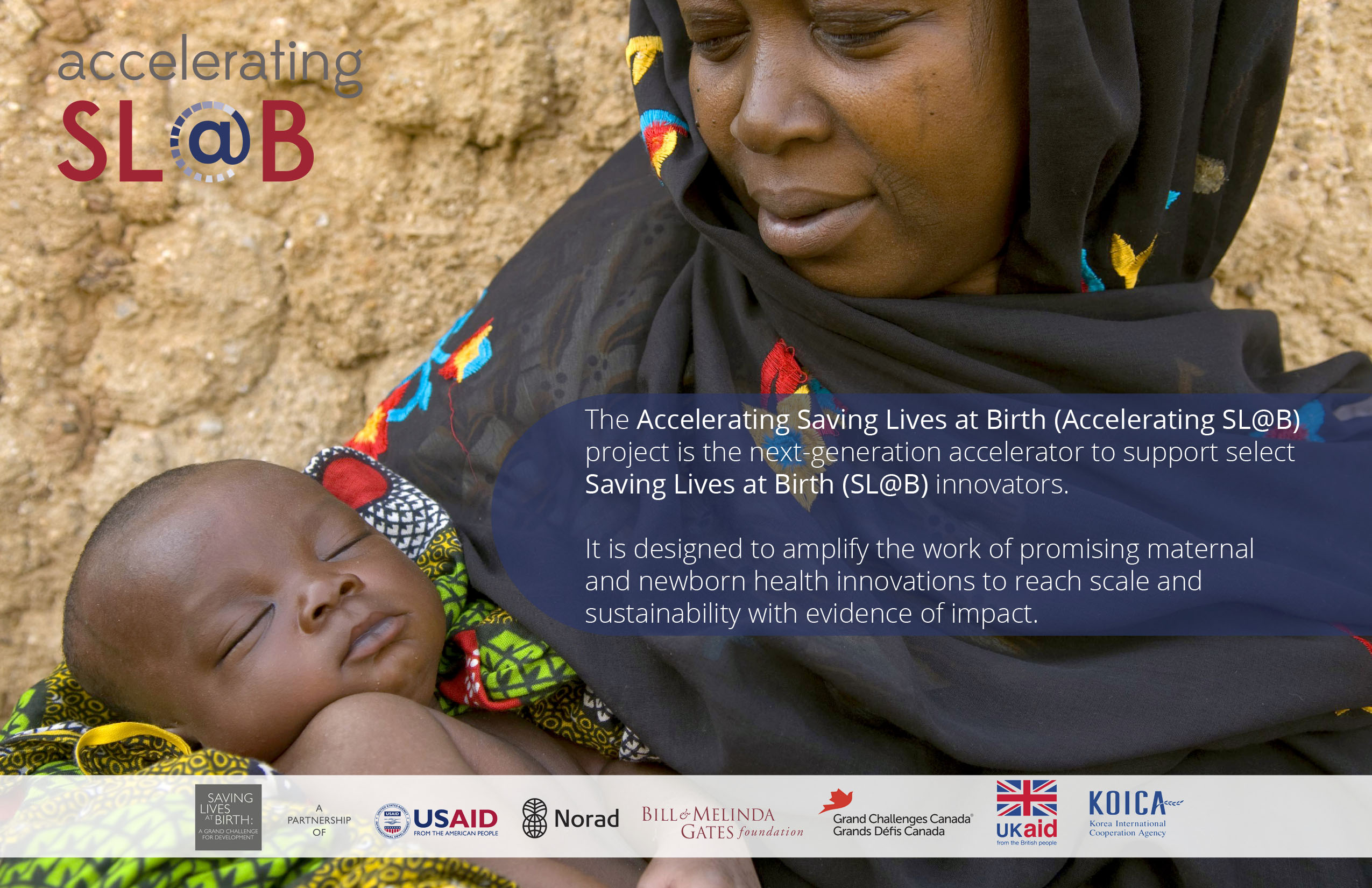
Continuous innovation in the Maternal and Newborn Child Health sector plays a crucial role in reducing maternal and neonatal mortality. As new products and services continuously crop up in this space, human capital becomes key in implementing and scaling these innovations. However, setting up human capital structures is a challenge, especially in new organizations focused on the development of an innovation and perhaps only hiring for technical skills needed to develop the innovation. Human capital structures become increasingly critical as organizations attempt to hire and retain the right individuals, then motivate, reward, and compensate top talent. The Accelerating Saving Lives at Birth program recognized the important role that human capital plays in the launch and scale of innovations and developed a set of best practices outlined in the ‘team’ domain under the Framing…
Read More
Accelerating Impact: How Funders and Other Partners can Speed the Pathway to Scale

Accelerating Impact: How Funders and Other Partners can Speed the Pathway to Scale

News
By Andrea Taylor For social innovations, scaling is the key to impact. But how do these innovations scale, and how can funders, accelerators, and other partners accelerate that process? We took a close look at the experience of a sample of innovators funded by the Saving Lives at Birth program to answer this question. Their journeys provide insight into which factors are most helpful on the pathway to scale and how funders and other partners can support and speed up this process. Through semi-structured interviews with eleven innovator organizations, we learned that there are three key factors that accelerate the path to scaling: Preparation for scale at the early stages of innovation development. For some innovators, the funding application process served as a forcing mechanism to prompt early thinking about…
Read More
Extending the reach of private health initiatives beyond the pill

Extending the reach of private health initiatives beyond the pill

News
By Pratik Doshi, Research Assistant, Duke Global Health Innovation Center, MD Candidate at Duke University School of Medicine Joy Bhosai, Associate Director, Innovations in Healthcare and Duke Global Health Innovation Center Elina Urli Hodges, Assistant Director of Programs, Innovations in Healthcare and Duke Global Health Innovation Center Krishna Udayakumar, Executive Director, Innovations in HealthcareDirector, Duke Global Health Innovation Center Following a 2008 UN General Assembly call for human rights responsibilities from the pharmaceutical industry, low- and middle-income countries (LMICs) have benefited from an expansion of access to essential medicines. In 2015, the Sustainable Development Goals (SDGs) echoed this call in SDG Goal 3, which aims to ensure healthy lives and well-being for all people. While measurement and evaluation systems have accompanied many public-sector health programs, significant gaps remain in measuring the outcomes of private global…
Read More
Saving Lives at Birth: Evaluating the Impact of a Grand Challenge for Development

Saving Lives at Birth: Evaluating the Impact of a Grand Challenge for Development

News
Duke University is releasing today (Thursday, June 18, 2020) the results of its two-year evaluation of the Saving Lives at Birth (SL@B) Grand Challenge for Development. Co-led by the Duke Global Health Innovation Center and Duke Global Health Institute Evidence Lab, the  evaluation  seeks to examine SL@B in the global landscape of maternal and newborn health (MNH) innovation funding, understand the role of SL@B in filling a gap in MNH innovation funding, and analyze the impact of SL@B on sourcing and scaling MNH innovations between 2011 and 2020. The evaluation utilized a quantitative and qualitative mixed-methods approach using multiple sources of data and produced several work products in the form of reports and briefs, culminating in the report released today. The Enduring Challenge: Maternal and Newborn Mortality In 2015, WHO…
Read More

Duke University: Making a Difference in the World

News
The Duke Global Health Innovations Center is proud to be a part of Duke University’s extraordinary response to COVID-19. We are: saving lives in our hospitals and clinics, and through the extraordinary preparation, skill, courage and commitment of our healthcare workers. discovering treatments, potential vaccines, and innovative safety processes in our laboratories. reinventing education and serving students in every state and around the world, supporting them through an unimaginably disruptive time and with a focus on preparing tomorrow’s resilient leaders. anchoring our communities through a commitment to our employees and their families. ensuring that our essential missions of teaching, learning, research, patient care and service to society survive, thrive and excel despite the challenges we face helping to shape policies that will restore our society. We know that people are…
Read More
Duke Health’s Investment in the Future of Global Health

Duke Health’s Investment in the Future of Global Health

News
Krishna Udayakumar, Director of the Duke Global Health Innovation Center Duke Health has been a member of the World Economic Forum for the past 10 years, positioning Duke University to play a leading role in addressing the world’s most pressing health concerns. Innovations in Healthcare, a Duke-hosted non-profit that I have the privilege of leading, was incubated through the World Economic Forum in 2009-11 and launched at Davos in 2011. Co-founded by Duke, McKinsey & Company, and the World Economic Forum, Innovations in Healthcare supports the scale and impact of promising innovations. In the past eight years, we have curated a network of 92 innovators who are improving healthcare across the globe, and we have brought together dozens of companies, foundations, and government agencies to build strong partnerships to support these…
Read More
Chlorhexidine Cord Care Saved Thousands of Newborn Lives in Nepal

Chlorhexidine Cord Care Saved Thousands of Newborn Lives in Nepal

News
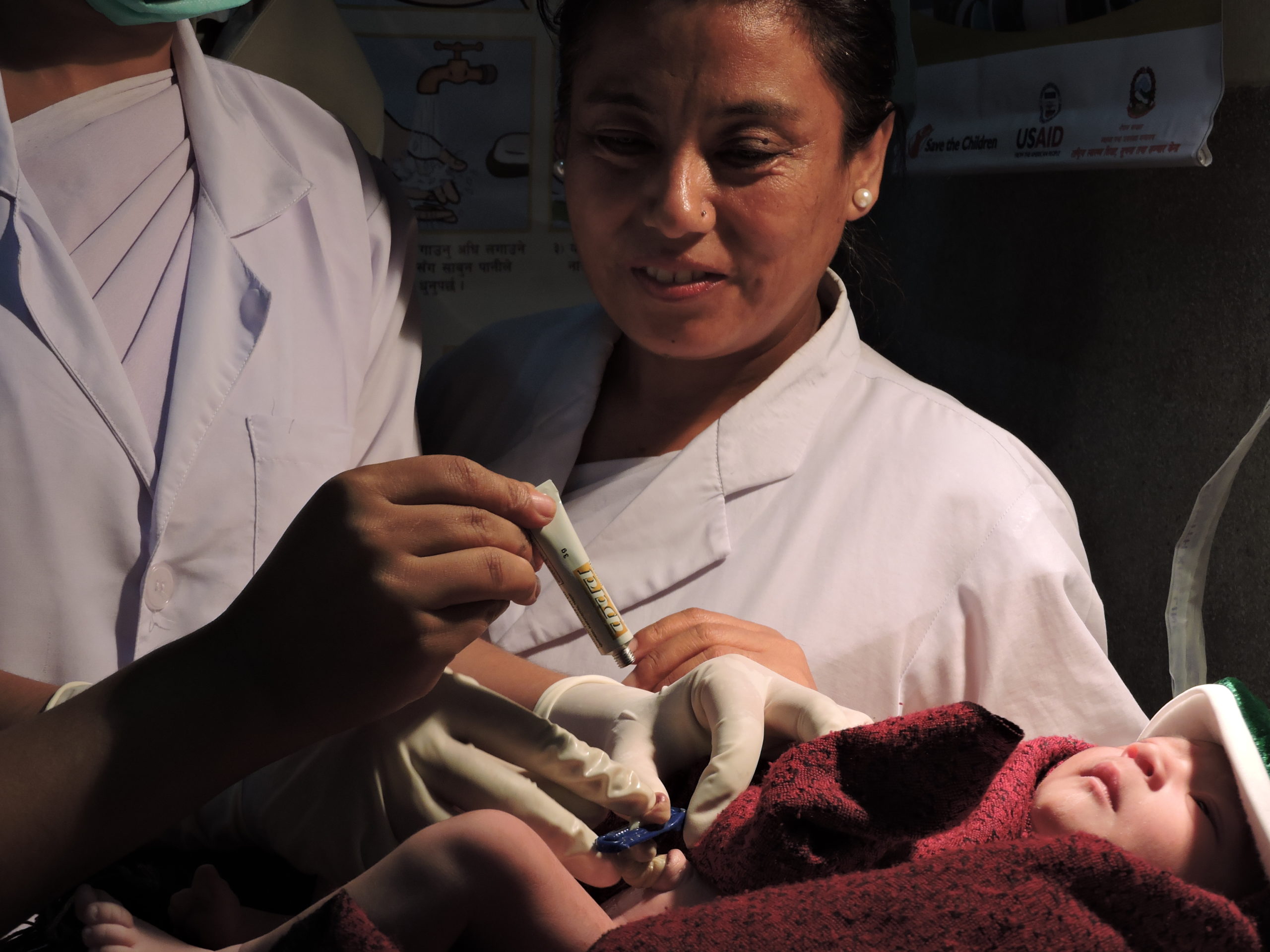
Chlorhexidine cord care saved thousands of newborn lives in Nepal Author: Leela Khanal, JSI Nepal (Accelerating SL@B advisory board member) Sepsis in the first week or two of life is a major cause of newborn deaths. Deeply rooted cultural practices surrounding the care of the newborn’s umbilicus are a large part of the reason why Nepal’s neonatal mortality rate did not improve between 2006 and 2011 and remained stagnant at 33 deaths/1000 (DHS survey of Nepal 2006 and 2011) live births.  Mothers and grandmothers preferred traditional practices that contributed to the high neonatal death rate, such as treating the fresh umbilical stump with turmeric, mustard oil paste, ash, unknown medicine, even cow dung or vermillion—the bright red cosmetic powder used by Hindu women. These practices can lead to the introduction…
Read More
The I in Innovation

The I in Innovation

News
The I in Innovation By Alden Zecha and Katherine Flowers Growing an innovation from an idea to initial offering to scale is a unique journey along a path with many turns and forks along the way. Through my work with A-SL@B innovators, I have learned that one of the most difficult challenges for a founder lies in deciding what one’s role should be as the organization around the innovation shifts focus from development to scaling. Over time, a founder’s role gradually evolves from innovator to organizational leader who manages employees, finances, and external partnerships. At this stage, organizational founders may find themselves in a difficult position of deciding whether and how to continue their contributions to their organization as the innovation scales. To better understand this process, I interviewed four…
Read More
USAID Philippines ReachHealth Project: Innovation Scouting Report

USAID Philippines ReachHealth Project: Innovation Scouting Report

Our Reports
USAID’s ReachHealth Project aims to respond to the unmet need for family planning (FP) in the Philippines that has led to high levels of teenage pregnancy, by improving FP knowledge on the individual, household, and community levels; increasing access to comprehensive quality care, increasing provider capacity to deliver comprehensive, quality, and respectful care; strengthening health systems; increasing demand for FP and MNH services; and transforming gender norms. The ReachHealth Project, in partnership with the Duke Global Health Innovation Center (GHIC), in order to achieve sustainability across the intersection of the project’s goals to increase healthy behaviors in underserved populations; increase access to care; and bolster health systems on the local, regional, and national levels, will include a Grand Challenge that, through the provision of grants, individualized mentorship, and strategic connections,…
Read More