We’re hiring!

We’re hiring!

News
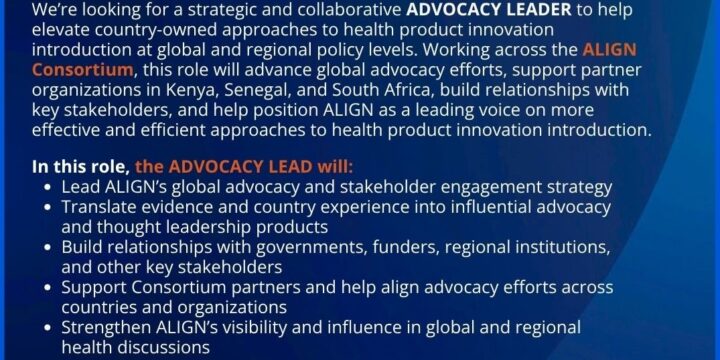
Do you know someone whose work spans global health innovation, health policy, financing, operational research, implementation science, or health systems transformation? We're recruiting a senior faculty member at the Associate Professor or Professor level to join a highly collaborative environment spanning the Duke Global Health Innovations Center, the Duke Global Health Institute, and the Duke-Margolis Institute for Health Policy. We especially welcome leaders with significant experience at national and global levels who have built careers across academia, government, multilaterals, social enterprise, or implementation settings. 🗓️ ❗Priority deadline for guaranteed consideration: *September 15, 2026.* Please share broadly with colleagues and networks who may be interested. 🔗 Learn more and apply.
Read More
“The Compass” Newsletter: updates from the ALIGN Consortium

“The Compass” Newsletter: updates from the ALIGN Consortium

News
  "The Compass" Newsletter: Sharing news from the ALIGN Consortium and Beyond With so much learning on national innovation prioritization and introduction across the ALIGN Consortium and beyond, we figured it was time to launch a newsletter. Why did we dub it "The Compass"? Because a compass offers direction without telling you where to go. That's what the newsletter aims to do, along with the Consortium at large: As governments face an expanding pipeline of health innovations and increasingly difficult decisions about what to prioritize, our goal is to share the evidence, experiences, and lessons that help countries navigate choices on their own terms. Subscribe here for future issues of "The Compass." Interested in longer-form learning and insights? Check out the ALIGN Consortium's Substack: The "ALIGN Exchange." In the meantime, catch…
Read More
ALIGN Case Studies – Full Series (Maintenant disponible en français!)

ALIGN Case Studies – Full Series (Maintenant disponible en français!)

Case Studies, News
The series is produced by the ALIGN Consortium as part of our shared learning agenda. Each case study—featuring Thailand (FR | Thaïlande), the Netherlands (FR | Pays-Bas), and Ghana (FR | Ghana)—examines how a particular country has navigated the persistent challenge of introducing new health innovations—how it evaluates, prioritizes, finances, and sustains them within real fiscal and political constraints. Our aim is not to rank systems or prescribe a single model, but to understand how reform actually unfolds: what enables it, what constrains it, and what does and does not transfer across contexts. These cases inform ALIGN’s work alongside national partners and are offered in the spirit of mutual learning. We welcome reactions, corrections, and counter-examples from colleagues who know these systems first-hand.
Read More
Case Study Series – the Netherlands

Case Study Series – the Netherlands

Case Studies, News
📄 Download the full Netherlands case study. (FR | Pays-Bas) Also in this series: Ghana (FR | Ghana) and Thailand (FR | Thaïlande). Health leaders in all health systems must make critical decisions about which products―including diagnostics, medical devices, medicines, and vaccines―and services to provide within the constraints of their health budget. Between the global pipeline that brings technologies to market and the national systems that must deliver them at scale lies a critical inflection point: health innovation introduction. Prioritization―which often includes health technology assessment (HTA) processes―is an essential function of innovation introduction, as are the coordinated set of national and subnational processes through which innovations are prepared for sustained, scaled access (e.g., regulatory review, procurement, supply chain planning, etc). The Netherlands offers a case of disciplined innovation introduction in…
Read More
Case Study Series – Ghana

Case Study Series – Ghana

Case Studies, News
📄 Download the full Ghana case study (FR | Ghana). Also in this series: Thailand (FR | Thaïlande) and the Netherlands (FR | Pays-Bas). Health leaders in all health systems must make critical decisions about which products―including diagnostics, medical devices, medicines, and vaccines―and services to provide within the constraints of their health budget. Between the global pipeline that brings technologies to market and the national systems that must deliver them at scale lies a critical inflection point: health innovation introduction. Prioritization―which often includes health technology assessment (HTA) processes―is an essential function of innovation introduction, as are the coordinated set of national and subnational processes through which innovations are prepared for sustained, scaled access (e.g., regulatory review, procurement, supply chain planning, etc). Every health system faces difficult choices about which innovations to…
Read More
Case Study Series – Thailand

Case Study Series – Thailand

Case Studies, News
📄 Download the full Thailand case study.  (Also in this series: Ghana and the Netherlands.) Health leaders in all health systems must make critical decisions about which products―including diagnostics, medical devices, medicines, and vaccines―and services to provide within the constraints of their health budget. Between the global pipeline that brings technologies to market and the national systems that must deliver them at scale lies a critical inflection point: health innovation introduction. Prioritization―which often includes health technology assessment (HTA) processes―is an essential function of innovation introduction, as are the coordinated set of national and subnational processes through which innovations are prepared for sustained, scaled access (e.g., regulatory review, procurement, supply chain planning, etc). Thailand’s approach to health product prioritization―among the most fully institutionalized in middle-income countries―is anchored in the Health Intervention and…
Read More
The ALIGN Market Intelligence Hub – White Paper

The ALIGN Market Intelligence Hub – White Paper

News, Our Reports, White Paper
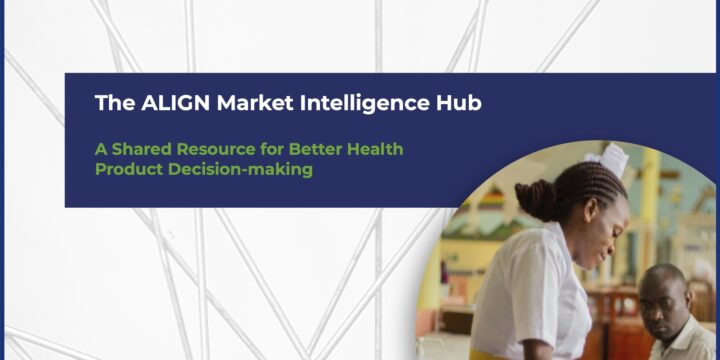
Health leaders, particularly those in low- and middle-income countries (LMICs), face a structural gap between the rapid pace of health innovation and the ability of their countries to anticipate, prioritize, finance, and introduce new products effectively and efficiently. Decisions about adopting devices, diagnostics, therapeutics, and vaccines are often made reactively, with limited visibility into product supply (new emerging products, pipelines, costs, regulatory timelines, delivery requirements), health system capacity, and local context, including demand. Yet such visibility is key to country-led improved health product prioritization and introduction decisions. This paper, developed by the ALIGN Consortium, announces a tool to address the gap between the possible pipeline and realized rollout of health products. ALIGN Market Intelligence Hub is a decision-support tool designed to transform fragmented data on health products into actionable prioritization and…
Read More
An Open Letter: Building Stronger Systems for Health Innovation Introduction

An Open Letter: Building Stronger Systems for Health Innovation Introduction

News, Our Reports, White Paper
In this open letter, members of the ALIGN Consortium call for urgent reforms to strengthen national systems for health innovation introduction through four pillars: (1) whole-of-government coordination and capacity; (2) improved data availability and use; (3) multi-sector engagement for alignment and accountability; and (4) portfolio-based prioritization and planning.   📄 Download the Open Letter Original Publication: February 2026
Read More
Learn About the ALIGN Exchange Substack

Learn About the ALIGN Exchange Substack

News
The ALIGN Consortium aims to improve health outcomes by strengthening the critical decision-making systems that determine how health product innovations are prioritized and introduced in countries, to make those systems more effective and efficient. Comprised of the Duke Global Health Innovation Center, the South African Medical Research Council (SAMRC), Keprecon, and ENDA Santé, the ALIGN Consortium supports the national governments in Kenya, Senegal, and South Africa to enhance innovation introduction, looking at four focus areas: whole-of-government coordination and capacity strengthening, data-driven decision making, whole-of-market engagement (including national, regional, and global engagement), and portfolio-based planning. The goal is to create more accountable, resilient health systems that deliver better health outcomes faster for all, and to generate insights, tools, and resources that can be used by stakeholders around the world.  Learning is a crucial component of…
Read More
2024-2025 Annual Report

2024-2025 Annual Report

News, Our Reports
Innovation to Impact: Our Year in Global Health July 1, 2024 - June 30, 2025 As we navigate a period of profound changes in health and healthcare globally, it is with great pride and gratitude that we share our 2024–2025 Annual Report, a reflection of the transformative work we’ve accomplished together with partners around the world. At the Duke Global Health Innovation Center and Innovations in Healthcare, we remain steadfast in our belief that everyone deserves to thrive. Impact at a Glance Key Highlights: AI Learning Lab Launched ➡️ We launched an innovation incubator supporting six pioneering organizations applying AI solutions to local health challenges in low- and middle-income countries Rwanda's Model Marburg Response ➡️ Through the COVID Treatment Quickstart Consortium, our on-the-ground team helped Rwanda achieve one of the lowest mortality…
Read More