The ALIGN Market Intelligence Hub – White Paper

The ALIGN Market Intelligence Hub – White Paper

Blog, News, Our Reports, White Paper
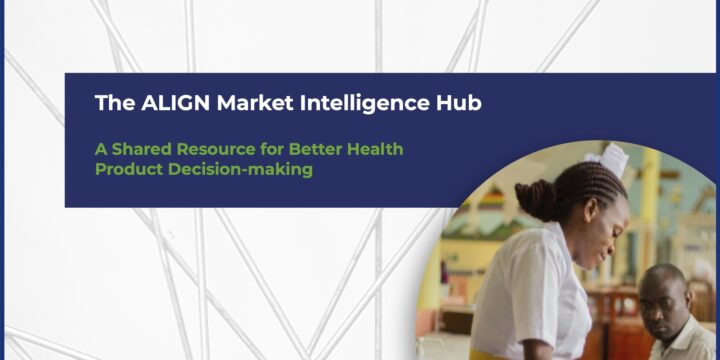
Health leaders, particularly those in low- and middle-income countries (LMICs), face a structural gap between the rapid pace of health innovation and the ability of their countries to anticipate, prioritize, finance, and introduce new products effectively and efficiently. Decisions about adopting devices, diagnostics, therapeutics, and vaccines are often made reactively, with limited visibility into product supply (new emerging products, pipelines, costs, regulatory timelines, delivery requirements), health system capacity, and local context, including demand. Yet such visibility is key to country-led improved health product prioritization and introduction decisions. This paper, developed by the ALIGN Consortium, announces a tool to address the gap between the possible pipeline and realized rollout of health products. ALIGN Market Intelligence Hub is a decision-support tool designed to transform fragmented data on health products into actionable prioritization and…
Read More
Learn About the ALIGN Exchange Substack

Learn About the ALIGN Exchange Substack

Blog, News
The ALIGN Consortium aims to improve health outcomes by strengthening the critical decision-making systems that determine how health product innovations are prioritized and introduced in countries, to make those systems more effective and efficient. Comprised of the Duke Global Health Innovation Center, the South African Medical Research Council (SAMRC), Keprecon, and ENDA Santé, the ALIGN Consortium supports the national governments in Kenya, Senegal, and South Africa to enhance innovation introduction, looking at four focus areas: whole-of-government coordination and capacity strengthening, data-driven decision making, whole-of-market engagement (including national, regional, and global engagement), and portfolio-based planning. The goal is to create more accountable, resilient health systems that deliver better health outcomes faster for all, and to generate insights, tools, and resources that can be used by stakeholders around the world. Learning is a crucial component of…
Read More
Food for Trust: What nutrition teaches us about building trust in health

Food for Trust: What nutrition teaches us about building trust in health

Blog
Food and nutrition are among the most personal—and most public—parts of our lives. They connect us to family, culture, identity, and values as well as health. They also reveal how health advice travels: through science, through policy, and through the messengers and media to which we choose to listen and learn. At Food for Trust: Nutrition Guidance, Influence, and Lessons on Trust in Health, part of Duke Global Health Institute’s Think Global series, panelists explored how nutrition guidance is made, communicated, and followed. Organized by the Duke Global Health Innovation Center and moderated by the Center’s Heather Lanthorn, the event (you can watch the video here!) tied directly to Healthier Together—an initiative jointly incubated by Duke, Your Local Epidemiologist, and COVID Collaborative—building infrastructure for the next generation of grassroots, trustworthy…
Read More
Students Aid Rural Pamlico County in Improving Health Access

Students Aid Rural Pamlico County in Improving Health Access

Blog
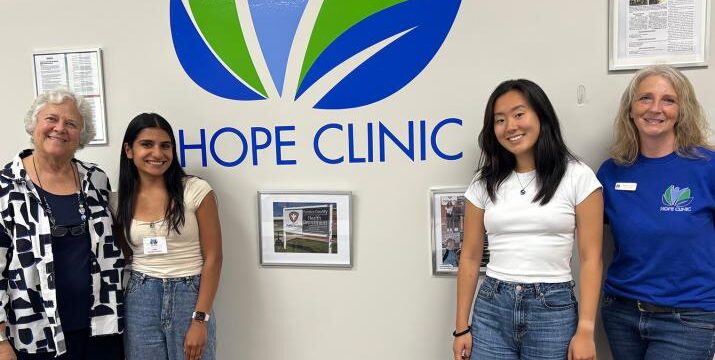
Now in its fourth year, DGHI’s summer student research project may offer a template for counties facing challenges in providing health services to rural residents. [caption id="attachment_6376" align="aligncenter" width="690"] From left: DGHI professor Diana Silimperi, Duke undergrads Tanya Sachdev and Sophie Li, and Yolanda Cristiani, executive director at Hope Clinic, which provides free care for uninsured people in Pamlico County.[/caption] By Mary-Russell Roberson; This post originally appeared on the Duke Global Health Institute’s website on August 25, 2025. View the original here: https://duke.is/r/8u2y. This summer, Duke sophomore Tanya Sachdev was paddling in a dragon boat in Oriental, North Carolina, when someone on the boat began to experience stroke symptoms. The group paddled to shore and waited for EMS, who took the patient to the nearest hospital – 45 minutes away…
Read More
QuickStart COVID-19 Test and Treat resources leveraged to support Marburg and Mpox response in Rwanda 

QuickStart COVID-19 Test and Treat resources leveraged to support Marburg and Mpox response in Rwanda 

Blog
Rwanda’s Ministry of Health leveraged COVID-19 resources, established through the QuickStart COVID-19 Test-and-Treat Initiative, to respond to the Marburg Virus Disease (MDV) and Claude 1b Mpox outbreak. The Ministry of Health invited the QuickStart team in Rwanda to support various response efforts including development of guidelines and standard operating procedures, supply chain management and strengthening the capacity of healthcare workers to respond to the outbreaks. QuickStart investments have contributed to Rwanda’s health system resilience and pandemic preparedness capacity underscoring the importance of building sustainable investments for resilient health systems.   Learn more.
Read More

Building trust in health

Blog, News
Trust in traditional health authorities and information is declining, while capabilities to create and spread false or misleading content are growing stronger. This is set against a backdrop of increasing skepticism in institutions, artificial intelligence reach, and disasters both natural and human-made. Allowing these trends to continue will have health and social ramifications that are increasingly dramatic, deep, and deadly. Against these currents, many trustworthy individuals and organizations act in physical and virtual communities with good intentions—but insufficient coordination, capacity, and community engagement. This results in duplicative content and capacity-building on some topics, scant support on other topics, and continual, costly reinvention of the wheel. It creates an environment that is not only inefficient and potentially inequitable but also works against trust building as well as positive behavior and policy…
Read More
Meet 5 of the Organizations Making an Impact Through the Global Health Innovation Grants Program, Blog Series 4 of 4

Meet 5 of the Organizations Making an Impact Through the Global Health Innovation Grants Program, Blog Series 4 of 4

Blog
Welcome to the final installment of the Innovations in Healthcare Global Health Innovation Grantees blog series.  History of the Global Health Innovation Grants Program Since 2016, The Pfizer Foundation’s Global Health Innovation Grants (GHIG) program has supported community-based initiatives that aim to improve quality of care and strengthen health systems in lower income countries. Innovations in Healthcare supports GHIG grantees by facilitating connections in the ecosystem, hosting GHIG-specific workshops and peer convenings at the Annual Forum, and conducting regular program monitoring to provide portfolio and individual results to the Pfizer Foundation. Now in its eighth year (GHIG8), 20 new recipients of the one-year grant program have each received $100,000 USD to drive innovative solutions that help address vaccine-preventable illness in their communities. [caption id="attachment_5800" align="aligncenter" width="596"] GHIG8 geographic scope. This year’s grantees address a…
Read More
Meet 5 of the Organizations Making an Impact Through the Global Health Innovation Grants Program, Blog Series 3 of 4

Meet 5 of the Organizations Making an Impact Through the Global Health Innovation Grants Program, Blog Series 3 of 4

Blog
Welcome to the third installment of the Innovations in Healthcare Global Health Innovation Grantees blog series.  History of the Global Health Innovation Grants Program Since 2016, The Pfizer Foundation’s Global Health Innovation Grants (GHIG) program has supported community-based initiatives that aim to improve quality of care and strengthen health systems in lower income countries. Innovations in Healthcare supports GHIG grantees by facilitating connections in the ecosystem, hosting GHIG-specific workshops and peer convenings at the Annual Forum, and conducting regular program monitoring to provide portfolio and individual results to the Pfizer Foundation. Now in its eighth year (GHIG8), 20 new recipients of the one-year grant program have each received $100,000 USD to drive innovative solutions that help address vaccine-preventable illness in their communities. [caption id="attachment_5800" align="aligncenter" width="596"] GHIG8 geographic scope. This year’s grantees address…
Read More
September 2024 Monthly Roundup

September 2024 Monthly Roundup

Blog
The “Monthly Roundup” is a monthly newsletter dedicated to sharing the latest news from the Duke Global Health Innovation Center and Innovations in Healthcare. View the September 2024 newsletter. Subscribe to the monthly newsletter.
Read More
Meet 5 of the Organizations Making an Impact Through the Global Health Innovation Grants Program, Blog Series 2 of 4

Meet 5 of the Organizations Making an Impact Through the Global Health Innovation Grants Program, Blog Series 2 of 4

Blog
Welcome to the second installment of the Innovations in Healthcare Global Health Innovation Grantees blog series. Access the first blog here.  History of the Global Health Innovation Grants Program Since 2016, The Pfizer Foundation’s Global Health Innovation Grants (GHIG) program has supported community-based initiatives that aim to improve quality of care and strengthen health systems in lower income countries. Innovations in Healthcare supports GHIG grantees by facilitating connections, hosting program-specific workshops and peer convenings at the Annual Forum while also conducting regular program monitoring to provide portfolio and individual results to the Pfizer Foundation. Now in its eighth year (GHIG8), 20 new recipients have each received a USD $100,000 one-year grant to drive innovative solutions that help address vaccine-preventable illness in their communities. [caption id="attachment_5800" align="aligncenter" width="596"] GHIG8 geographic scope. This year’s grantees…
Read More