Students Aid Rural Pamlico County in Improving Health Access

Now in its fourth year, DGHI’s summer student research project may offer a template for counties facing challenges in providing health services to rural residents.
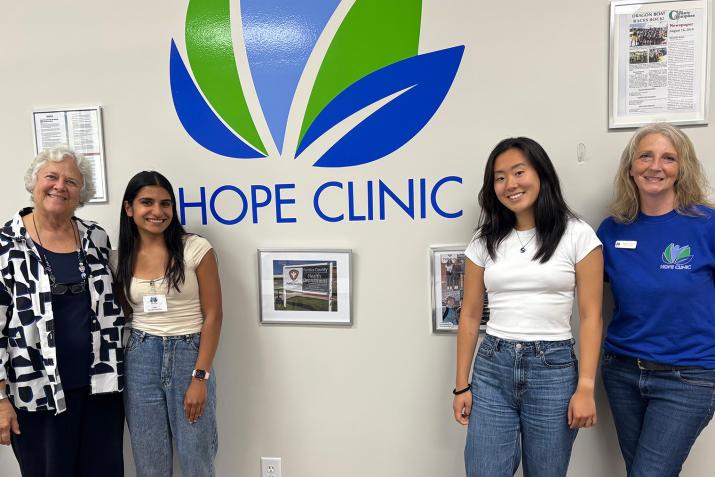
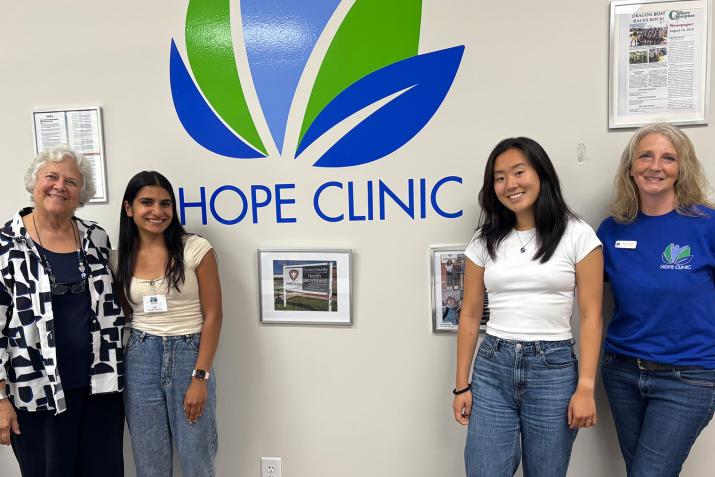
From left: DGHI professor Diana Silimperi, Duke undergrads Tanya Sachdev and Sophie Li, and Yolanda Cristiani, executive director at Hope Clinic, which provides free care for uninsured people in Pamlico County.

By Mary-Russell Roberson; This post originally appeared on the Duke Global Health Institute’s website on August 25, 2025. View the original here: https://duke.is/r/8u2y.

This summer, Duke sophomore Tanya Sachdev was paddling in a dragon boat in Oriental, North Carolina, when someone on the boat began to experience stroke symptoms. The group paddled to shore and waited for EMS, who took the patient to the nearest hospital – 45 minutes away in New Bern.

“You’re seeing firsthand the impact of being in a rural place,” said Sachdev, a global health major from Cary, N.C. “Growing up in Cary, I’ve taken healthcare access for granted.”

Sachdev spent the summer in rural Pamlico County, which encompasses sparsely populated agricultural land as well as tiny, touristy Oriental. She was participating in the Duke Global Health Institute’s Student Research Training (SRT) program, along with five other undergraduates, all of whom are pre-med. As part of the program, students spent eight weeks in Pamlico, building their global health research skills while working with local agencies on projects that can help expand access to health care services.
Pamlico County has no hospital. No urgent care. No pediatrician. No OB-GYN. No specialists. So getting care can be challenging for residents. Sachdev saw those obstacles every day while working with Hope Clinic, which provides free healthcare to uninsured people. 

“My favorite part has been the conversations with people here,” she said. “Now I can understand why someone would want to live in a rural community. I used to be focused on the challenges of rural communities and now I see the strengths.”

The SRT project in Pamlico is showing that one way to create solutions to rural healthcare challenges is to bring together energetic Duke students and experienced local leaders in an environment steeped in a global health ethos.

“I believe we have an evidence base that this is working,” said Diana Silimperi, M.D., adjunct professor of the practice of global health, who runs the program along with Sumi Ariely, Ph.D., associate professor of the practice of global health. “Our hope is that this model could be utilized in other counties.” 

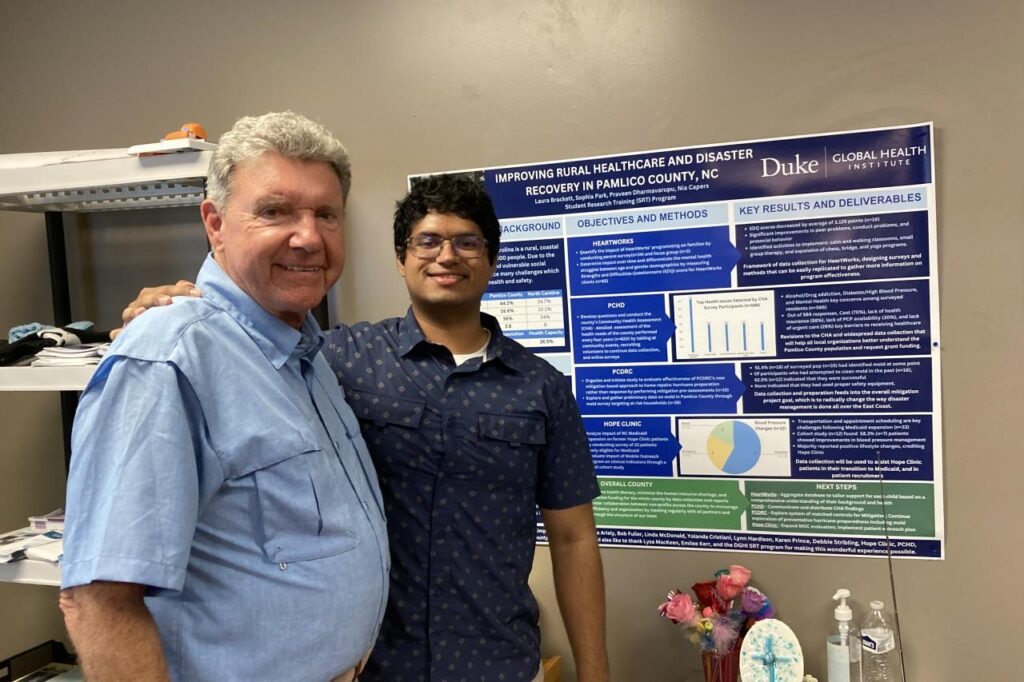
Bob Fuller, director of the Pamlico County Disaster Recovery Coalition, and Vikram Sambasivan, who conducted mental health surveys for the coalition. “The past SRT teams have had great reputations so people trust us,” Sambasivan said. “We have UNC fans who are happy to see us.”

It’s All About the Data

This summer’s SRT students worked with several community organizations in addition to Hope Clinic – HeartWorks, which provides free afterschool and summer enrichment for children, the Pamlico County Health Department, which is unusual among health departments in offering primary care, and the Pamlico County Disaster Recovery Coalition (PCDRC), which helps residents prepare for and recover from disasters such as the wind-driven flooding that can occur during hurricanes, tropical storms, and nor-easters.

The students completed about a dozen projects, including surveying residents about the mental health effects of flooding, designing and evaluating a blood pressure workshop for kids, and collecting data about the impact of Medicaid expansion in the county.

The data gathered and analyzed by the students is used by community partners for planning and evaluation and to secure government and private funding. “We live off the data, which is hard to get from the work force, because they work 120 percent just to keep the wheels on,” said Bob Fuller, director of the PCDRC. “When the students come, in effect it’s the lifeblood we need for the future.”

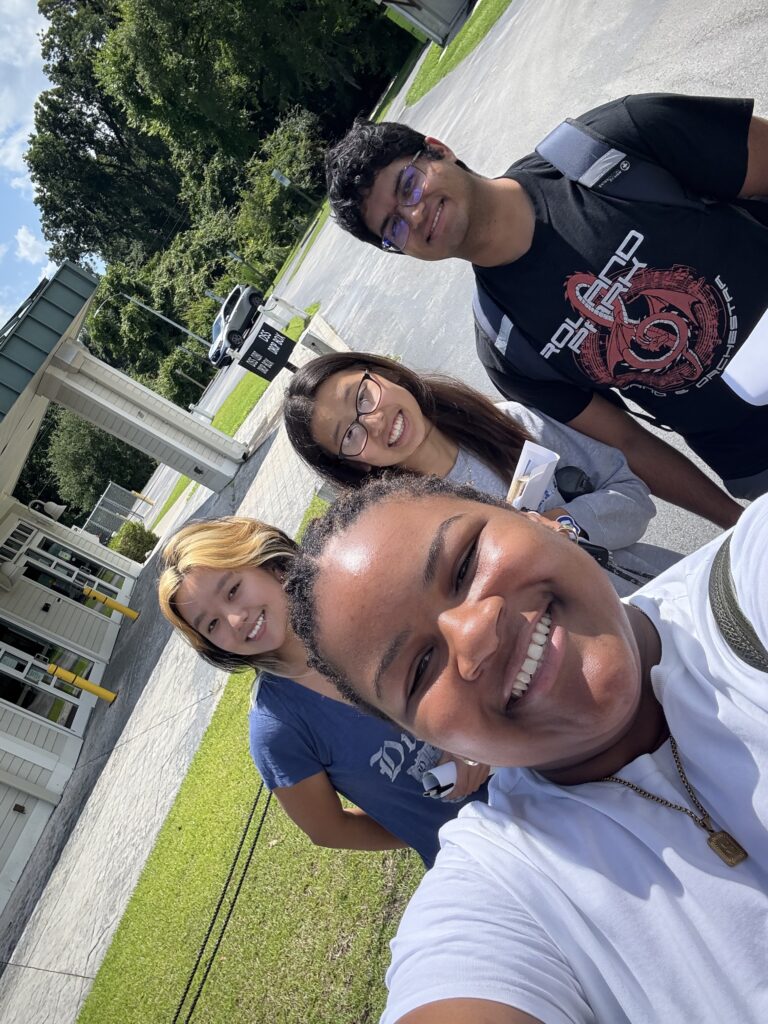
Sydney Okeke takes a selfie with Jackie No, Grace Wang, and Vikram Sambasivan. Of her experience in Pamlico, Okeke said, “You see that health is intertwined with everything. It’s not all about the clinical stuff.”
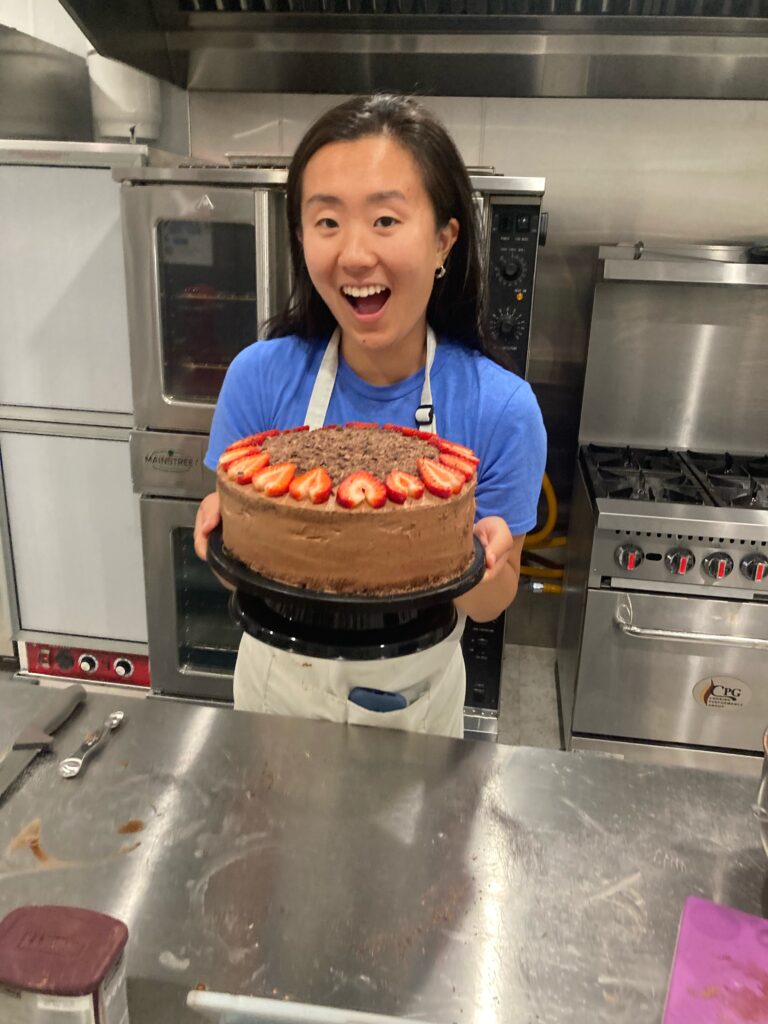
The owner of the Mariposa Bakery in Oriental let Sophie Li use the kitchen in her free time.

“Before Duke students, there was no data,” said Lynn Hardison, director of nursing at the Pamlico County Health Department. She said previous SRT teams collected data that helped the health department decide to offer primary care, both in person and via telehealth.

This summer, SRT students Jackie No, a junior majoring in biomedical engineering, and Grace Wang, a junior majoring in sociology, conducted surveys to help Hardison evaluate the effectiveness and sustainability of the two new programs. In addition, No created an app to collect data from electronic medical records to evaluate usage, costs and benefits of the programs. “The app will help drive our decision-making,” Hardison said. “I’m not tech savvy so there’s no way I could have developed that app.”

The project has also helped Hope Clinic roll out a system of mobile clinics that rotate among locations in the county to reach folks who lack transportation. Yolanda Cristiani, executive director of Hope Clinic, described the SRT teams as “the extra hands and brains to do the research required to implement programs.” Previous SRT teams helped gather the data to design and fund the mobile clinics, and this summer, Sachdev and Sophie Li conducted surveys to evaluate them. 

The continuity is intentional. “There’s a lot of mentorship from team to team,” said Li, a junior double majoring in neuroscience and global health. “We will help the new cohort next spring, in the same way that past cohorts helped us.” 

The successive teams also build and grow the trust that’s formed between Pamlico and Duke. Hardison, who grew up in Pamlico County, said, “The community at first was skeptical about having Duke students here – that this big academic institution would come in and try to change them. But the community has learned to love them and now they look forward to them coming back every year.”

Finding Synergies in County Services

Silimperi and Ariely set up regular meetings between students and community leaders with the goal of gathering feedback and direction for students and fostering community connections. These get-togethers led to new ideas for collaboration: Could a representative of Hope Clinic present information about the free clinic to parents whose kids attend HeartWorks? Could PCRDC add a few questions to the mental health surveys about diabetes and blood pressure to share with the health department? 

“One of the things that’s interesting is the synergies between each of the partners,” Cristiani said. “You wouldn’t think that HeartWorks and Hope Clinic would have anything in common, but when we talk to each other, we’re finding connections.”

Silimperi and Ariely also look for collaborations at Duke. They worked with the Duke University School of Nursing to set up rotations at the Pamlico County Health Department for nursing students, two of whom returned after graduation to work there. The professors hope to set up a similar program for medical residents in the Department of Family Medicine and Community Health.

“It’s gratifying to have the chance to really embody service learning, which is what global health and Duke are all about – knowledge in the service of society,” Ariely said. 

A Model for Rural Counties

As a sea-loving sailor, Silimperi settled in Pamlico in 2018, after a globe-trotting career as a public health pediatrician and epidemiologist. Joining the faculty at Duke inspired her to bring the two communities together.

She partnered with Ariely to create a Bass Connections program in 2020, focusing on the response of a rural community to the Covid-19 pandemic. “We developed a foundation of trust during that experience and a set of partners,” she said. “We also saw how valuable it was for the students.” They launched the first SRT team in Pamlico in 2022, creating the first stateside site for the program. Other SRT teams have worked in Kenya, Honduras, and India in recent years.


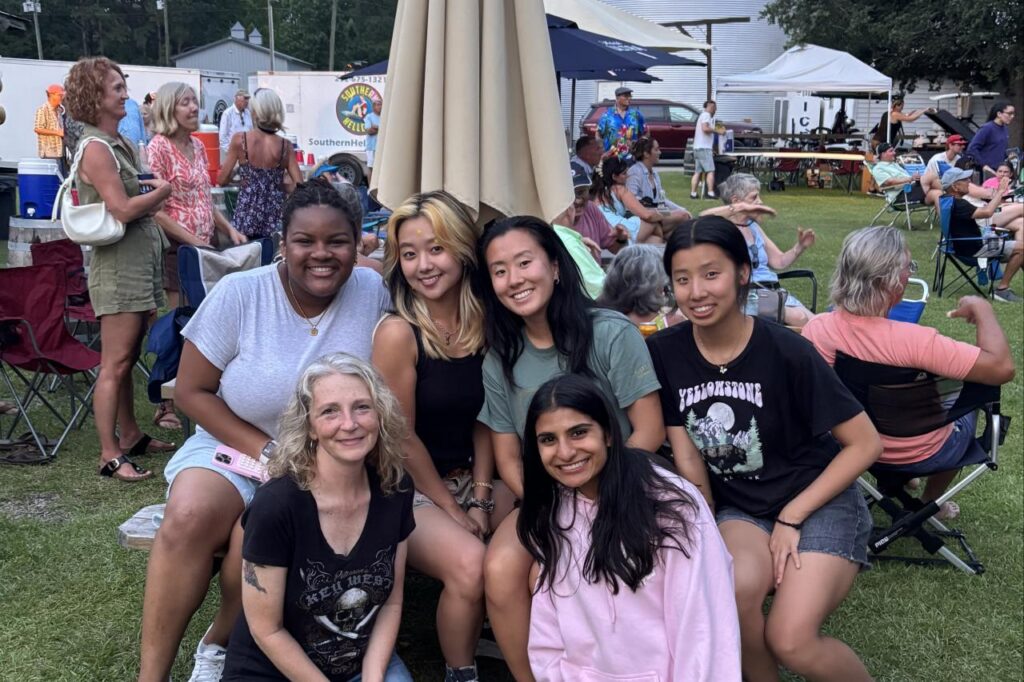
The team relaxes at a summer music festival with Yolanda Cristiani, bottom left,  of Hope Clinic. Students pictured are Tanya Sachdev, bottom right, and on the back row from left, Sydney Okeke, Jackie No, Sophie Li and Grace Wang.

The two professors hope to expand their university-community model to other counties, perhaps in collaboration with other universities. “In the next three to five years, I’d like to see us in at least five more counties,” Silimperi said.

To prepare for expansion, they are evaluating the program and identifying crucial ingredients for success, one of which is co-leading with community leaders rather than arriving with predetermined fixes. 

“It’s about empowering local expertise and partners to collaborate together,” Ariely said. “We come in to spark new ideas that lead to innovation and support improved outcomes, but all the success we and our students have had has to do with community partners co-leading with us. They are passionate and the backbone of sustained change.”