Responding to unmet family planning needs

Responding to unmet family planning needs

Blog
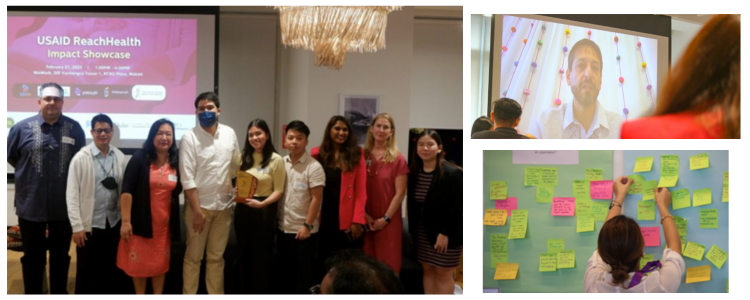
Reflections following the ReachHealth Initiative  7.7 million women in the Philippines wanted to use family planning in 2017, but were unable to do so.1 That same year, teenage pregnancies were at 9% and live births by teenage mothers (aged 10-19) were 196,478.2 In response to these dire unmet family planning needs and high teenage pregnancy rates, the Duke Global Health Innovation Center (Duke GHIC), RTI International, and the Johns Hopkins Center for Communications Programs, implemented the ReachHealth Initiative. ReachHealth, a five-year initiative (2018-2023), aimed to strengthen and improve access to critical health services for Filipino families. This blog explores the challenges, key activities, and reflections following the initiative’s conclusion. [caption id="attachment_4203" align="aligncenter" width="750"] Caption: Photos from the USAID Innovation Accelerator Impact Showcase held February 2022 in the Philippines. Four digital…

Read More
The Time to Act is Now on Antimicrobial Resistance, the Shadow Pandemic

The Time to Act is Now on Antimicrobial Resistance, the Shadow Pandemic

Blog
A timely #IiHForum23 panel discussion Antimicrobial resistance (AMR) is a growing public health threat with the potential to cause a global pandemic. AMR occurs when bacteria, viruses, fungi, and parasites develop resistance to antimicrobial drugs that were previously effective in treating infections. This means that infections that were once easily treatable can become difficult, if not impossible, to treat.  On April 25, 2023, key stakeholders from around the globe came together to discuss the critical challenges and necessary efforts to combat AMR at the IiH Annual Forum, at the same time that the European Commission adopted a proposal to intensify efforts to address AMR, and the United States Congress reintroduced the Pioneering Antimicrobial Subscriptions to End Upsurging Resistance (PASTEUR) Act to encourage novel drug development to treat resistant infections. Panelists included AMR…
Read More
Oral Antiviral Access Critical to Saving Lives, Controlling COVID-19 Outbreaks

Oral Antiviral Access Critical to Saving Lives, Controlling COVID-19 Outbreaks

Blog
Oral Antiviral Access Critical to Saving Lives, Controlling COVID-19 Outbreaks This virus is here to stay. It is still killing, and it’s still changing. The risk remains of new variants emerging that cause new surges in cases and deaths. The worst thing any country could do now is to... let down its guard, to dismantle the systems it has built, or to send the message to its people that COVID-19 is nothing to worry about.—World Health Organization Director-General Tedros Adhanom Ghebreyesus, May 5, 2023 Recent actions by the World Health Organization and the United States to remove the designation of COVID-19 as a public health emergency follow similar moves by almost all countries, deprioritizing COVID-19 responses. Yet the disease remains a serious threat, claiming thousands of lives each week, particularly…
Read More
Reflections following #IiHForum23

Reflections following #IiHForum23

Blog
Inspiring. To summarize the Innovations in Healthcare Annual Forum in one word: inspiring.   Despite a full agenda over the two-day conference, the energy in the room never dwindled. For the first time since 2019, stakeholders from across the healthcare ecosystem came together to share knowledge, discuss challenges, and explore solutions to some of the most pressing global health issues including:  Equitable access to quality care;  Infectious diseases and pandemic preparedness;  Antimicrobial resistance;  Integrated, innovative private sector approaches for addressing non-communicable diseases;  Trust in public health;  Innovation lessons from global pandemics;  Strengthening primary care as a foundation for resilient health systems and global health security;   The use of artificial intelligence to improve health and healthcare; and  Coordinated approaches to funding of health ventures in emerging markets.   The Innovations in Healthcare Annual Forum enables all voices to be heard. The event…
Read More
COVID-19 Anguish Channeled into Survivor Support, Push for Better Pandemic Policies

COVID-19 Anguish Channeled into Survivor Support, Push for Better Pandemic Policies

Blog
The Global Accountability Platform (COVID GAP) blog series. March 30, 2023 By Nellie Bristol When Charonda Johnson’s 62-year-old father died from a COVID-19 infection in July, 2020, in addition to intense grief, she felt rage. A US Air Force Iraq war veteran, she was acutely attuned to early warnings about the unfolding pandemic and urged her family to take precautions. But the church her parents attended downplayed the threat, ignored mask mandates, and continued to hold regular services. Although, unlike the bulk of the congregation, her parents wore masks, they continued to attend services and church sponsored conferences, including those she later found out also were attended by some infected with COVID-19. “They were listening to the things that were being said in the media, listening to things they were hearing…
Read More
UN High Level Pandemic Meeting Should Be Only the Beginning

UN High Level Pandemic Meeting Should Be Only the Beginning

Blog
The Global Accountability Platform (COVID GAP) blog series. March 9, 2023 By Nellie Bristol While negotiations continue at the World Health Organization (WHO) on a new pandemic accord and amendments to the International Health Regulations, plans also are evolving toward a UN high level meeting September 20 aimed at compelling health emergency preparedness to the top levels of government. While the meeting is critical to refocusing the world’s attention, establishing a mechanism to sustain long term political support is essential to successfully countering future threats. The High-Level Meeting (HLM) on Pandemic Prevention, Preparedness and Response (PPR) was called for in a UN resolution last year. Representatives for Israel and Morocco, who are co- facilitating the meeting’s preparatory process, set out a broad agenda in recently released  document as well as scheduling a hearing in May to get input from non-governmental…
Read More
African Leaders Commit to Tackling Pandemic Fueled Routine Immunization Deficits

African Leaders Commit to Tackling Pandemic Fueled Routine Immunization Deficits

Blog
The Global Accountability Platform (COVID GAP) blog series. February 23, 2023 By Nellie Bristol In the face of falling routine immunization rates and recent spikes in some vaccine preventable diseases, African leaders pledged this week to “reignite the political will” to prioritize universal access to immunization through a declaration endorsed by African Union (AU) Heads of State and Government February 19. The declaration, entitled “Building Momentum for Routine Immunization Recovery in Africa,” commits governments to increasing and sustaining domestic investments in vaccines as well as addressing bottlenecks in vaccine delivery and improving disease surveillance. It invites African development banks, regional economic communities, and regional health organizations to increase resource mobilization and manufacturers to facilitate affordable access to vaccines and support technology transfer to African companies. It calls for an AU/World Health…
Read More
Fatal Lack of Oxygen During Pandemic Peaks Spurs Action to End Enduring Shortages

Fatal Lack of Oxygen During Pandemic Peaks Spurs Action to End Enduring Shortages

Blog, News
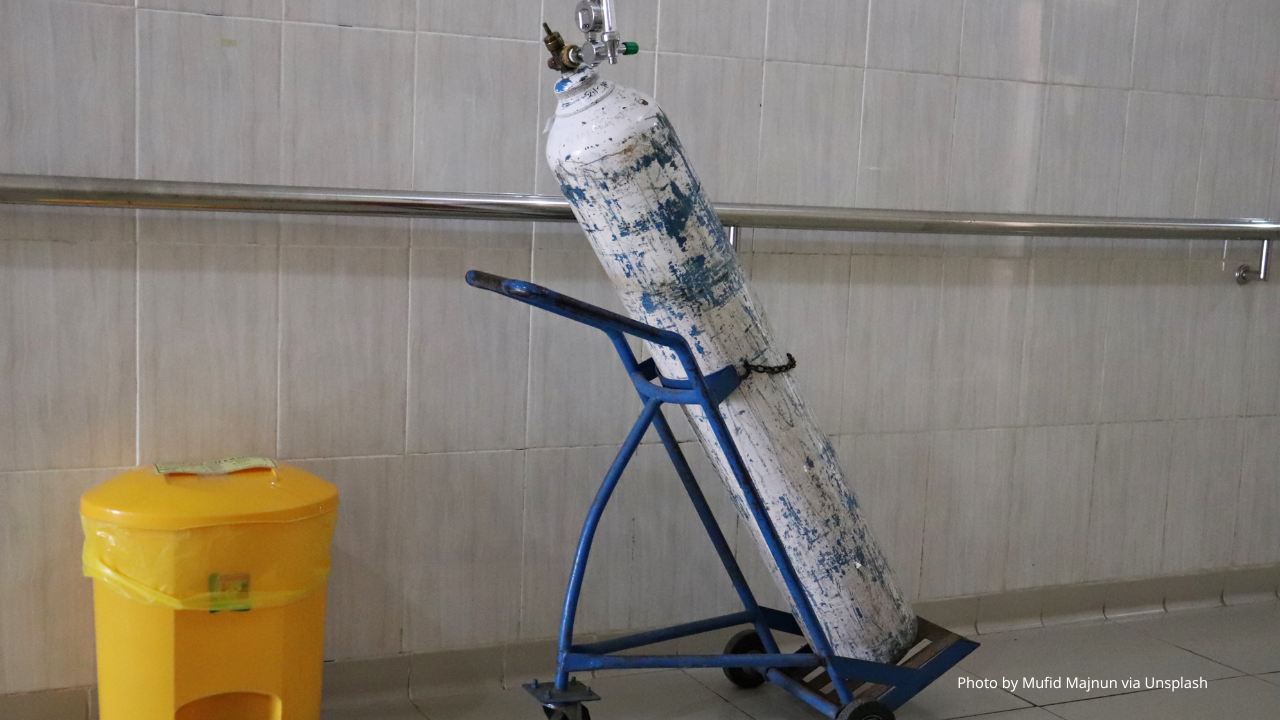
The Global Accountability Platform (COVID GAP) blog series. February 10, 2023 By Nellie Bristol Access to medical oxygen literally has been a matter of life and death during COVID-19 peaks and shortages have had devastating effects in many countries around the world. While specific data are difficult to come by, one study showed that vast under-resourcing in intensive care units in ten African countries contributed to high mortality rates, with one in two patients dying without receiving oxygen. In Peru, which reported the highest per capita COVID-19 death rates in the world, at least 11 Lima hospitals reported shortages, people stood in long lines for bottled oxygen, and price gouging was rampant. In addition to its importance during the pandemic, medical oxygen is critical to treatment of struggling newborns, those with pneumonia, and a variety of…
Read More
Communicators Require New Approaches to Build Trust in Science and Public Health

Communicators Require New Approaches to Build Trust in Science and Public Health

Blog, News
The Global Accountability Platform (COVID GAP) blog series. January 25, 2023 By Nellie Bristol Public health communicators need to change their approaches to ensure that those hesitant about vaccines “will adopt the desirable behavior and feel good about it,” said Michelle Williams, dean of faculty and professor of epidemiology at the Harvard T.H. Chan School of Public Health. She appeared with other panelists January 18 at a World Economic Forum (WEF) roundtable on the State of the Pandemic. “The worst thing we did in the U.S. was when people expressed hesitancy or curiosity, we basically said to them, ‘follow the science.’ And that’s the absolute wrong thing to do,” Williams said. Instead, communicators need to “take the approach of meeting them where they are,” help them understand the risks and the benefits, and…
Read More
High Level Health Emergency Council Proposed for WHO Executive Board Review

High Level Health Emergency Council Proposed for WHO Executive Board Review

Blog, News
The Global Accountability Platform (COVID GAP) blog series. January 12, 2023 By Nellie Bristol As health security improvement efforts continue at all governmental levels, World Health Organization (WHO) is advancing ten proposals aimed at strengthening its role and effectiveness in health emergency preparedness and response.  Originally introduced informally at last year’s World Health Assembly, the proposals are on the agenda for the WHO Executive Board (EB) meeting scheduled for late this month. Suggestions range from establishment of a Global Health Emergency Council, to improving national preparedness assessments, to increasing WHO funding to rapidly scale up response capacities. WHO leadership is asking the EB to note the report, provide guidance on how to work with Member States to move the proposals forward, and to identify any gaps. The proposed council is intended to ensure sustained high…
Read More