
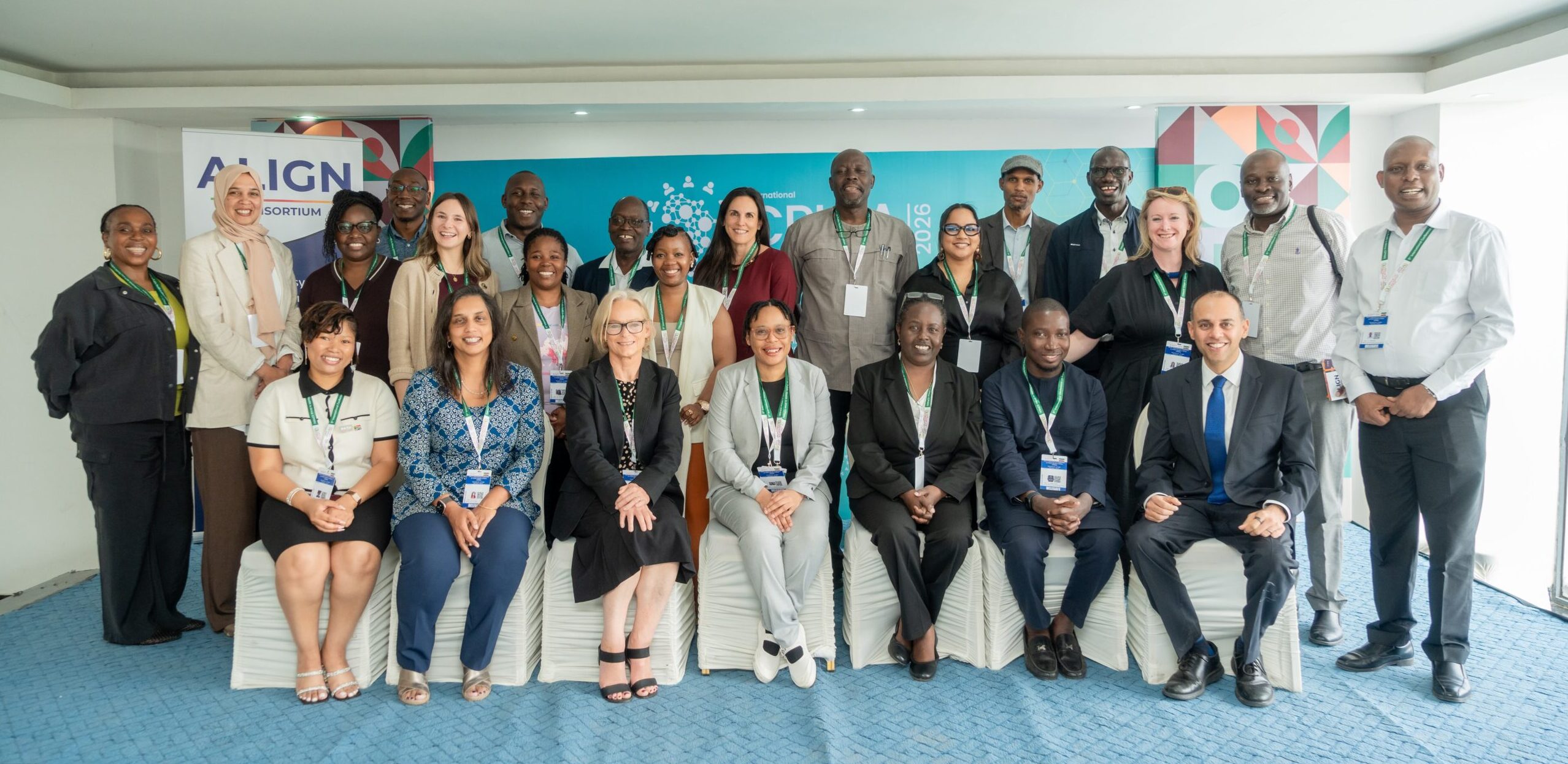
Addis Ababa (24 November, 2026) – On the sidelines of the 5th International Conference on Public Health in Africa (CPHIA 2026), health ministry officials from Kenya, Senegal and South Africa joined the ALIGN Consortium today to call on global partners to involve African governments earlier and more meaningfully in decisions about introducing new treatments and health technologies into their national health systems.
The call to action has already been endorsed by over 20 organizations, anchored by African regional and national organizations, including the African Union Development Agency (AUDA-NEPAD), Speak Up Africa, and the Kenya Health Federation. International organizations, including PATH, Global Health Technologies Coalition (GHTC), and Clinton Health Access Initiative (CHAI), have also signed on, and the document remains open for others to endorse. The full list of signatories is included below and will be updated here.
“We are at the steering wheel,” said Dr. Nazila Ganatra, Director of the Directorate of Health Products and Technologies at Kenya’s Ministry of Health. “Funders should co-create and co-develop with us the innovations that will solve our priorities.”
“Where there is no alignment, there is no adoption,” said Dr. Nonhlanhla Ndlovu, Deputy Director-General of South Africa’s National Department of Health. “If partners come in at the beginning, at the design stage, with communities and with the government, we avoid that.”
The call to action urges global partners financing and supporting health product introduction to commit to the following:
- Bring governments in early: Engage African governments early in the process of research and development, product development, and financing discussions.
- Finance national priorities, not individual products: Align public health funding with nationally determined priorities and national health plans.
- Plan for sustainability from the start: Make financing predictable and multi-year.
- Invest in the institutions that decide: Strengthen whole-of-government capacity, at the national and subnational levels, to assess, govern, and monitor how health products are introduced and scaled.
- Share market intelligence and decision-support tools: Provide timely, transparent data on health products.
- Align with one another: Coordinate funding, processes, and reporting in alignment with each country’s national health plan.
- Respect country decisions and share accountability: Accept nationally determined decisions on whether, when, and at what scale an innovation is introduced.
The full text of the call to action is available here.
The call to action also includes the commitment of the ALIGN Consortium along with health ministries of Kenya, Senegal, and South Africa to generate and share evidence on the introduction of health innovations; to make practical tools openly available; and to convene governments and global partners.
The call to action is in line with the Accra Reset, a head-of-state-led initiative to reduce donor dependence and increase health sovereignty. Launched in 2025, the Accra Reset calls for global health funders to align behind a single national plan, budget, and platform. The ALIGN Consortium’s call to action builds on this message by focusing on the introduction of health products.
Today’s call to action also comes in the context of a steep drop in funding for global public health, which plummeted by up to $10 billion last year alone.
“Global funders and agencies need to recognize that country stakeholders are their most powerful partners when it comes to rolling out new drugs, vaccines, and other public health breakthroughs,” said Krishna Udayakumar, Founding Director of the Duke Global Health Innovation Center, which serves as secretariat for the ALIGN Consortium. “As global health funding declines, what national governments prioritize matters more than ever. When funders work with country leadership across sectors, they strengthen the entire system – and every dollar goes further.”
MEDIA CONTACT AND INTERVIEWS: For more information, or to arrange an interview with an expert speaker from the ALIGN Consortium, contact Beth Boyer, beth.boyer@duke.edu or +1 919 704 1381.
Below is the full list of signatories to the call to action, as of the time of publication. The full list is also being updated here:
- Access Bridge
- African Society for Laboratory Medicine (ASLM)
- ASKAAN
- AVAC
- Centre for Point-of-Care Diagnostics (CPOC-Dx), University of Pretoria
- Clinton Health Access Initiative (CHAI)
- Coalition of Health Research & Development (CHReaD)
- Corporate Council on Africa (CCA)
- Council of Governors (CoG) Kenya
- Global Health Technologies Coalition (GHTC)
- Health Programmes, Human Capital and Institutional Development Directorate, African Union Development Agency (AUDA-NEPAD)
- International Treatment Preparedness Coalition (ITPC)
- Kenya Healthcare Federation
- Medical Device Manufacturers of South Africa (MDMSA)
- National Institute for Communicable Diseases (NICD), University of Witwatersrand
- PATH
- South African Medical Technology Industry Association (SAMED)
- Southern African Laboratory Diagnostics Association (SALDA)
- Speak Up Africa
- Strengthening Africa’s Health Technologies Advocacy Coalition (SAHTAC)
- West Africa Regional Office, African Population and Health Research Center (APHRC)
About the ALIGN Consortium
The ALIGN Consortium – which stands for Advancing Country-Led Innovation Introduction through Government Engagement and Evidence – aims to improve health outcomes by strengthening the critical decision-making systems that determine how health product innovations are prioritized and introduced in countries, to make those systems more effective and efficient. Comprised of the Duke Global Health Innovation Center, the South African Medical Research Council (SAMRC), Keprecon, and ENDA Santé, the ALIGN Consortium supports the national governments in Kenya, Senegal, and South Africa to enhance innovation introduction. The Consortium’s goal is to create more accountable, resilient health systems that deliver better health outcomes faster for all, and to generate insights, tools, and resources that can be used by stakeholders around the world.